What Is Kouskousi?
Kouskousi is a small pasta associated with Greek cooking, especially in parts of northern Greece. It is made in tiny rounded pieces and is used in soups, simple home meals, vegetable dishes, and side plates. Because of its name and appearance, many people confuse it with couscous, but it is better understood as a pasta in the Greek kitchen.
The word may appear in different forms, including kouskousi and kouskousaki. These names are used for small, round pasta pieces that cook in water or broth and absorb surrounding flavors well. In everyday cooking, it sits between soup pasta, small pasta for side dishes, and a grain-like ingredient that can replace rice or larger pasta shapes in some meals.
Kouskousi is not difficult to understand once it is placed in its proper context. It is a simple ingredient, but it carries a strong connection to home cooking. It is the kind of food that fits into practical meals rather than formal restaurant dishes. Its value comes from texture, ease of use, and its ability to work with vegetables, legumes, meat, cheese, and olive oil.
Kouskousi and Its Place in Greek Food
Greek cooking has many small pasta shapes that are used in soups, stews, and baked dishes. Kouskousi belongs to this family of ingredients. It is not as internationally known as orzo, hilopites, or trahana, but it serves a similar purpose in many kitchens: it turns basic ingredients into a complete meal.
In northern Greek food culture, small pasta shapes are often used with broth, seasonal vegetables, pulses, and dairy. Kouskousi fits naturally into this pattern. It can be cooked plainly and served with grated cheese, stirred into soup, or mixed with chickpeas and greens. The ingredient is flexible, but it is not complicated.
The appeal of kouskousi is also linked to economy. Like many pasta products, it can feed several people with a small amount of dry product. It stores well, cooks without special equipment, and can be adapted to what is already available in the kitchen. For households that rely on practical cooking, these qualities matter.
Why Kouskousi Is Often Confused With Couscous
The similarity between kouskousi and couscous causes regular confusion. Both names sound alike, and both refer to small pieces of wheat-based food. However, the two should not be treated as exactly the same ingredient.
Couscous is traditionally connected with North African cooking and is usually made from semolina granules that are steamed. It is commonly served with stews, vegetables, chickpeas, meat, or broth. Kouskousi, on the other hand, is used as a Greek pasta and is usually boiled like other pasta shapes.
This difference affects cooking method. Couscous often needs steaming or soaking, depending on the type. Kouskousi normally needs boiling in salted water or cooking directly in soup. If a recipe asks for kouskousi, replacing it with instant couscous may change the texture, cooking time, and final result.
The confusion is understandable, but it is useful to separate the two. Kouskousi behaves more like tiny pasta. It becomes tender through boiling, holds its shape when cooked correctly, and can be drained or left in broth depending on the recipe.
What Kouskousi Looks Like
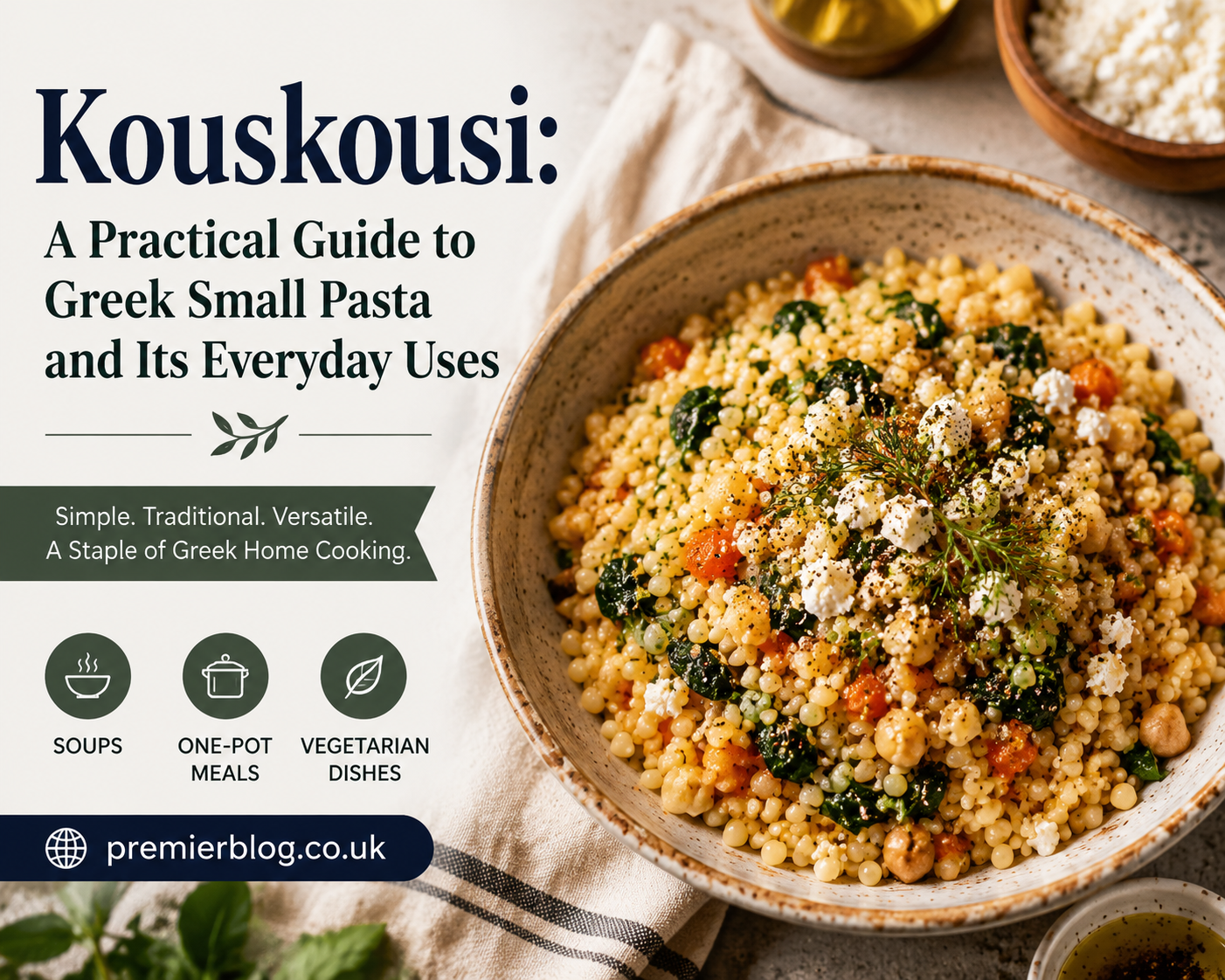
Kouskousi is usually small and round, similar to tiny beads of pasta. The pieces are larger and firmer than many forms of instant couscous, but smaller than most common pasta shapes. This size makes it suitable for soups and light main dishes.
Its shape is one of its most important features. Because the pieces are small, they cook evenly and distribute well through a dish. In soups, they do not dominate the bowl. In salads or side dishes, they provide body without making the dish heavy.
The texture after cooking depends on timing. When cooked properly, kouskousi should be tender but not mushy. If it is boiled too long, it can become soft and sticky. Like other small pasta, it benefits from attention during cooking.
Ingredients and Production
Most commercial versions of this type of Greek pasta are made from durum wheat semolina and water. Durum wheat is widely used in pasta because it gives structure and helps pasta keep its shape during boiling. The result is a small pasta that can handle both soups and mixed dishes.
Traditional homemade versions may vary by family or region. Some small Greek pasta products include milk, eggs, or other local additions, depending on the recipe. However, when discussing kouskousi as a store-bought pasta, it is safest to think of it as a durum wheat product unless the package says otherwise.
The production process is based on forming tiny pieces of dough and drying them so they can be stored. In the past, this kind of food preparation was often part of household routines. Today, many people buy packaged versions, but the ingredient still carries the feeling of traditional cooking.
How Kouskousi Is Cooked
The most common way to cook kouskousi is to boil it in salted water, similar to pasta. Because the pieces are small, they usually cook faster than larger pasta shapes, though exact timing depends on the brand and size. Many packaged versions provide a recommended cooking time, and that instruction should be followed.
Another method is to cook it directly in broth or soup. This works well when the goal is to create a thicker dish. As kouskousi cooks, it releases starch and absorbs liquid, which gives the soup more body. The cook must watch the amount of liquid because the pasta will continue absorbing moisture even after the heat is turned off.
For side dishes, kouskousi can be boiled, drained, and then mixed with olive oil, butter, cheese, herbs, or vegetables. It can also be combined with legumes such as chickpeas or lentils. This makes it suitable for simple vegetarian meals as well as meat-based plates.
Common Ways to Serve Kouskousi
One of the simplest ways to serve kouskousi is with olive oil and grated cheese. This type of preparation is plain but satisfying. It works as a side dish with roasted meat, grilled chicken, fish, or vegetables.
Kouskousi is also useful in soups. It can be added to vegetable soup, chicken broth, mushroom soup, or bean-based dishes. Because of its size, it spreads through the liquid and gives each spoonful texture. This is one reason small pasta shapes are common in home cooking.
Another practical use is in warm salads. Cooked kouskousi can be mixed with chickpeas, greens, tomatoes, cucumber, herbs, olives, or lemon dressing. This style is not limited to traditional recipes, but it works well because the pasta holds dressing and blends with Mediterranean ingredients.
Kouskousi can also be used in one-pot meals. A cook can soften onion and garlic in olive oil, add vegetables or legumes, pour in broth, and cook the pasta in the same pan. This method saves time and allows the pasta to absorb flavor from the other ingredients.
Kouskousi With Vegetables
Vegetables suit kouskousi because they balance its starch. Leafy greens such as spinach, Swiss chard, or seasonal greens work especially well. The greens soften quickly and mix through the pasta without needing a separate sauce.
A basic vegetable version can start with onion, leek, garlic, and olive oil. Once softened, the cook can add chopped greens, chickpeas, and cooked kouskousi. Lemon juice, black pepper, and a small amount of cheese can finish the dish. The result is a complete meal without heavy preparation.
Tomatoes also work well. A light tomato sauce with onion, garlic, and herbs can be mixed with cooked kouskousi for a simple plate. This is useful when a meal needs to be quick but still filling.
Kouskousi With Meat or Poultry
Kouskousi can be served with meat, especially when cooked as a side dish. It pairs with roasted chicken, lamb, beef stews, and meatballs. Its mild flavor allows it to take on the taste of sauces, juices, and broths.
In a chicken dish, kouskousi may be cooked in stock and served under the meat. The small pasta absorbs the stock and becomes more flavorful than if cooked only in water. Herbs such as parsley, dill, or oregano can be added at the end.
For stews, kouskousi can be served separately or added near the end of cooking. If added too early, it may overcook. The better approach is to cook it separately or add it when the stew is almost finished.
Kouskousi in Soups
Soup is one of the most natural uses for kouskousi. Small pasta gives soup more substance without turning it into a heavy meal. This is useful in family cooking, where a simple broth can become a filling lunch or dinner.
A vegetable soup with carrots, celery, onion, tomato, and kouskousi is easy to prepare. Chicken soup with kouskousi is another common-style option. Mushroom soup also works because the pasta adds texture while the mushrooms provide flavor.
The key issue is timing. Small pasta continues to absorb liquid after cooking. If the soup is prepared ahead of time, it may thicken as it sits. To avoid this, some cooks boil the pasta separately and add it before serving.
Difference Between Kouskousi, Orzo, and Trahana
Kouskousi is sometimes compared with orzo because both are small pasta shapes. Orzo looks like rice, while kouskousi is rounder and bead-like. Both can be used in soups and side dishes, but the mouthfeel is different.
Trahana is another Greek ingredient that may appear in similar dishes, but it is not the same. Trahana is usually made from grain and fermented dairy or a similar mixture, then dried. It has a stronger taste and creates a thicker, more porridge-like texture in soups.
Kouskousi is milder than trahana and smaller than many orzo shapes. This makes it useful when the cook wants texture without a strong sour or dairy flavor. It is a neutral base that can support many ingredients.
Nutritional Profile
As a wheat-based pasta, kouskousi is mainly a source of carbohydrates. It also provides some protein, especially when made from durum wheat semolina. The exact nutritional values depend on the brand, ingredients, and serving size.
Kouskousi becomes more balanced when served with vegetables, legumes, lean protein, or dairy. For example, a dish with chickpeas and greens provides more fiber and protein than plain pasta. A soup with vegetables and chicken also gives a wider nutritional profile.
Like other pasta, portion size matters. Kouskousi can expand during cooking, and a small dry portion can become a larger cooked serving. For everyday meals, it is best used as part of a balanced plate rather than as the only ingredient.
Buying and Storing Kouskousi
Kouskousi may be found in Greek grocery stores, Mediterranean food shops, online specialty stores, or in supermarkets that carry Greek pasta products. It may also be sold under names such as kouskousaki or Greek couscous pasta.
When buying it, check the ingredients and cooking instructions. Some versions may contain only semolina and water, while others may have additional ingredients. The cooking time can also vary depending on size and production method.
Storage is simple. Keep dry kouskousi in a sealed container in a cool, dry place. Once opened, it should be protected from moisture and insects like any other pasta. Cooked kouskousi should be refrigerated and used within a reasonable period.
Mistakes to Avoid When Cooking Kouskousi
The first mistake is overcooking. Because the pieces are small, they can become too soft quickly. It is better to check the texture before the full cooking time if using a brand for the first time.
The second mistake is using too little liquid in soup. Kouskousi absorbs liquid while cooking and after cooking. A soup that looks correct at first can become thick later. Adding extra broth or cooking the pasta separately can solve this.
The third mistake is treating it exactly like instant couscous. Kouskousi usually needs boiling, not just soaking. Using the wrong method can leave it undercooked or uneven.
The fourth mistake is not seasoning the cooking liquid. Small pasta has a mild taste, so salted water or broth helps. Without seasoning, the final dish can taste flat even if the other ingredients are good.
Simple Kouskousi Meal Idea
A practical kouskousi meal can be made with onion, garlic, olive oil, chickpeas, greens, and lemon. Start by softening chopped onion and garlic in olive oil. Add cooked chickpeas and chopped greens, then season with salt and pepper.
Boil the kouskousi separately until tender, drain it, and add it to the pan. Stir everything together for a minute so the flavors combine. Finish with lemon juice and a small amount of grated cheese if desired.
This type of dish shows why kouskousi is useful. It does not need a long recipe or expensive ingredients. It turns pantry items and vegetables into a complete plate.
Why Kouskousi Still Matters in Home Cooking
Kouskousi matters because it represents the practical side of food culture. It is not built around presentation or trend. It is built around feeding people with simple ingredients that work together.
Many traditional ingredients survive because they are useful. Kouskousi is one of those foods. It stores well, cooks quickly, and adapts to many dishes. It can be used in warm meals, soups, side dishes, and light salads.
It also gives cooks another option beyond rice, potatoes, or standard pasta. For anyone interested in Greek cooking, learning about kouskousi adds detail to the larger picture. Greek food is not only about well-known dishes. It also includes small, everyday ingredients that carry local habits and household memory.
Conclusion
Kouskousi is a small Greek pasta with a clear role in practical cooking. It is often confused with couscous, but it should be understood as a pasta used in soups, side dishes, vegetable meals, and simple one-pot dishes. Its shape, mild taste, and easy cooking method make it useful in many kitchens.
For readers discovering it for the first time, the best approach is simple. Cook it like small pasta, pair it with vegetables or broth, and avoid overcooking. Once understood, kouskousi becomes an easy ingredient to use in everyday meals.
Its importance is not based on complexity. It is based on function, tradition, and flexibility. That is why kouskousi remains worth knowing, especially for anyone who wants a clearer introduction to Greek home-style food.