Introduction to Digitisation
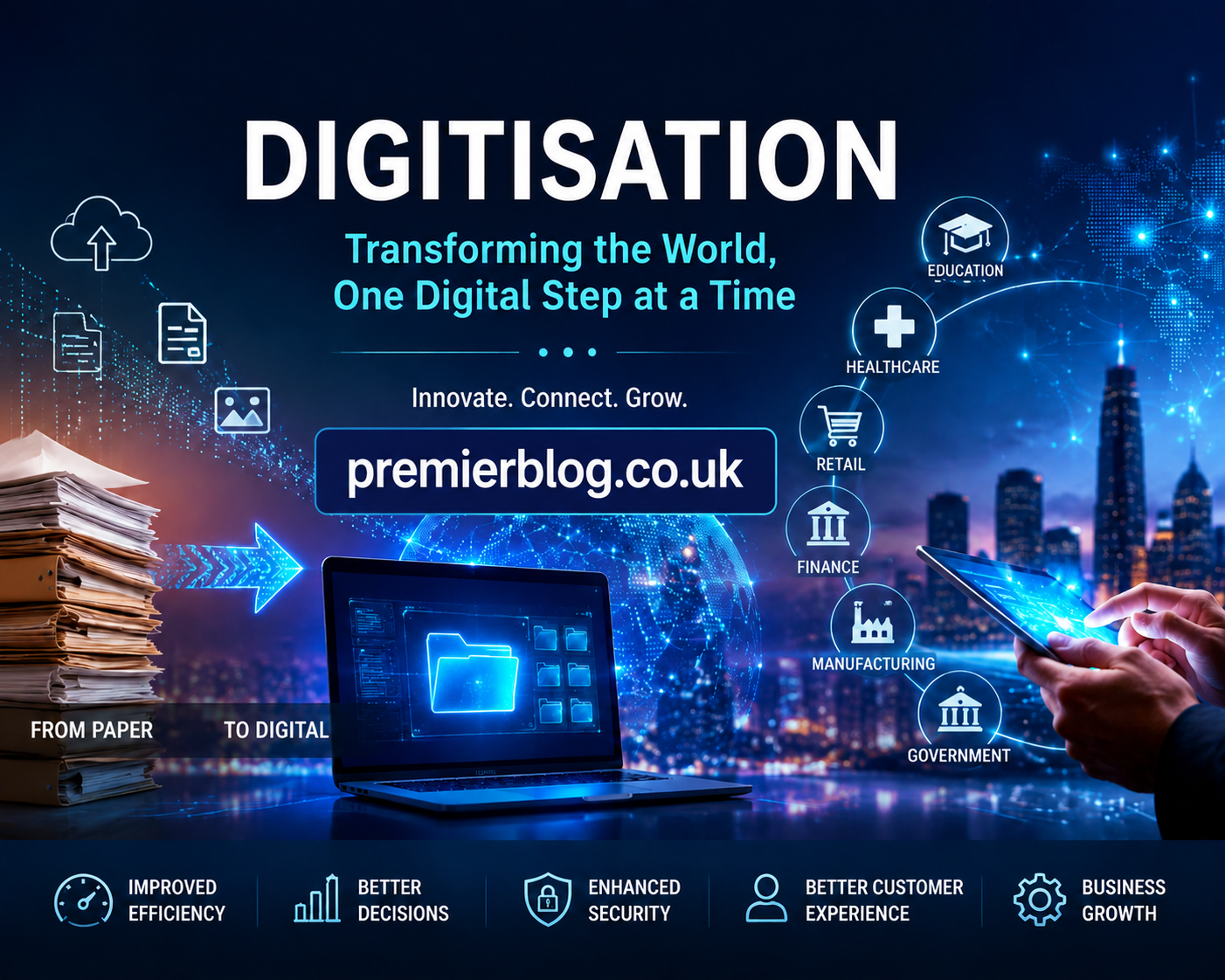
Digitisation has become one of the most powerful forces shaping the 21st century. It refers to the process of converting information, systems, and workflows into digital formats that can be processed, stored, and accessed through computers and modern technologies. While the idea may sound technical, its impact is deeply human—it changes how people communicate, how businesses operate, and how governments deliver services.
In simple terms, digitisation is the shift from physical and manual processes to digital systems. Whether it is scanning paper documents into PDFs, automating business workflows, or building entire online platforms, digitisation is the foundation of the modern digital economy. Today, almost every industry depends on it in some form, making it not just a trend but a necessity.
Understanding the Concept of Digitisation
At its core, digitisation is about converting analog information into digital form. This can include text, images, audio, video, and even complex operational processes. However, digitisation is often confused with digitalisation and digital transformation. While they are related, they are not the same.
Digitisation is the first step. It focuses on converting physical data into digital data. For example, turning handwritten records into a digital database is digitisation.
Digitalisation goes a step further by using digital tools to improve existing processes. For example, using software to manage digital records instead of filing cabinets.
Digital transformation is the broader shift where entire business models change due to digital technology.
Understanding this difference is important because digitisation is the foundation on which everything else is built.
The Evolution of Digitisation Over Time
The journey of digitisation did not happen overnight. It has evolved over several decades, beginning with the early days of computing.
Initially, computers were used only for basic calculations and data storage. Over time, with the rise of personal computers in the 1980s and the internet in the 1990s, digitisation started entering everyday life. Businesses began shifting from paper-based systems to digital records.
In the 2000s, cloud computing and mobile technology accelerated this change further. People could now store data online and access it from anywhere in the world. Today, with artificial intelligence, machine learning, and big data analytics, digitisation has become more intelligent, automated, and predictive.
This evolution shows that digitisation is not a fixed concept but a continuously advancing process.
Key Drivers Behind Digitisation
Several factors are driving the rapid adoption of digitisation across industries and societies.
One of the most important drivers is efficiency. Digital systems reduce manual work, save time, and minimize human errors.
Another major driver is accessibility. Digitised information can be accessed from anywhere at any time, enabling remote work, online education, and global communication.
Cost reduction also plays a significant role. Businesses can reduce expenses related to paper, storage, and manual labor by switching to digital systems.
In addition, customer expectations are pushing organisations to adopt digitisation. People today expect fast, seamless, and online services, whether they are shopping, banking, or learning.
Finally, technological advancement continues to accelerate digitisation. Innovations in cloud computing, artificial intelligence, and mobile devices make it easier than ever to digitise operations.
Benefits of Digitisation in Everyday Life
Digitisation has improved almost every aspect of daily life. One of the most visible benefits is convenience. People can now perform tasks like paying bills, booking tickets, and accessing information with just a few clicks.
In education, digitisation has made learning more accessible. Students can attend online classes, access digital libraries, and learn from anywhere in the world. This has created equal opportunities for learners regardless of location.
In healthcare, digitisation has improved patient care through electronic health records, telemedicine, and digital diagnostics. Doctors can now access patient history instantly, leading to faster and more accurate treatment.
Communication has also been revolutionised. Social media, messaging apps, and video calls allow instant global communication, breaking geographical barriers.
Even government services have become more efficient through digitisation. Many public services are now available online, reducing paperwork and improving transparency.
Impact of Digitisation on Businesses
Businesses are among the biggest beneficiaries of digitisation. It has completely changed how companies operate, compete, and grow.
One major impact is operational efficiency. Digital tools automate repetitive tasks, allowing employees to focus on more strategic work.
Digitisation also improves data management. Businesses can collect, store, and analyze large volumes of data to make better decisions. Data-driven strategies are now essential for success in competitive markets.
Customer experience has also improved significantly. Companies can now interact with customers through digital platforms, offer personalized services, and respond quickly to feedback.
In addition, digitisation has enabled global expansion. Even small businesses can now reach international customers through online platforms, breaking traditional market limitations.
Challenges of Digitisation
Despite its many advantages, digitisation also comes with challenges.
One major concern is data security. As more information moves online, the risk of cyberattacks and data breaches increases. Protecting sensitive data has become a top priority for organisations.
Another challenge is the digital divide. Not everyone has equal access to digital technologies, especially in rural or underdeveloped regions. This creates inequality in opportunities and access to services.
Implementation costs can also be high. While digitisation saves money in the long run, initial setup costs for infrastructure, software, and training can be expensive.
Additionally, many people face resistance to change. Employees and organisations that are used to traditional systems may find it difficult to adapt to digital workflows.
Role of Technology in Advancing Digitisation
Technology is the backbone of digitisation. Without technological advancements, large-scale digital transformation would not be possible.
Cloud computing allows businesses to store and access data remotely, reducing dependency on physical infrastructure.
Artificial intelligence enhances digitisation by automating complex tasks, analyzing data, and making predictions.
Internet of Things (IoT) connects devices and enables real-time data exchange, further improving efficiency and automation.
Blockchain technology adds transparency and security to digital transactions, especially in finance and supply chain systems.
Together, these technologies are making digitisation smarter, faster, and more reliable.
Future of Digitisation
The future of digitisation is expected to be even more advanced and integrated into everyday life.
We are moving toward a fully connected digital ecosystem where devices, systems, and people interact seamlessly. Artificial intelligence will play a major role in automating decision-making processes.
Industries such as healthcare, education, transportation, and finance will continue to evolve through deeper digitisation. Smart cities, digital currencies, and autonomous systems are likely to become more common.
At the same time, ethical concerns such as data privacy and digital responsibility will become increasingly important. Governments and organisations will need to create stronger regulations to ensure safe and fair digital practices.
The future of digitisation is not just about technology—it is about building a more efficient, inclusive, and intelligent world.
Conclusion
Digitisation is no longer optional; it is a fundamental part of modern life. It has transformed how we communicate, learn, work, and do business. From simple data conversion to advanced digital ecosystems, its impact is visible everywhere.
While challenges such as security risks and digital inequality still exist, the benefits far outweigh the drawbacks. As technology continues to evolve, digitisation will become even more powerful and deeply integrated into society.
In the coming years, the world will continue to move toward a fully digital future, where efficiency, connectivity, and innovation define success. Digitisation is not just a process—it is the foundation of the modern era and the gateway to the future.