Introduction to Messeregge
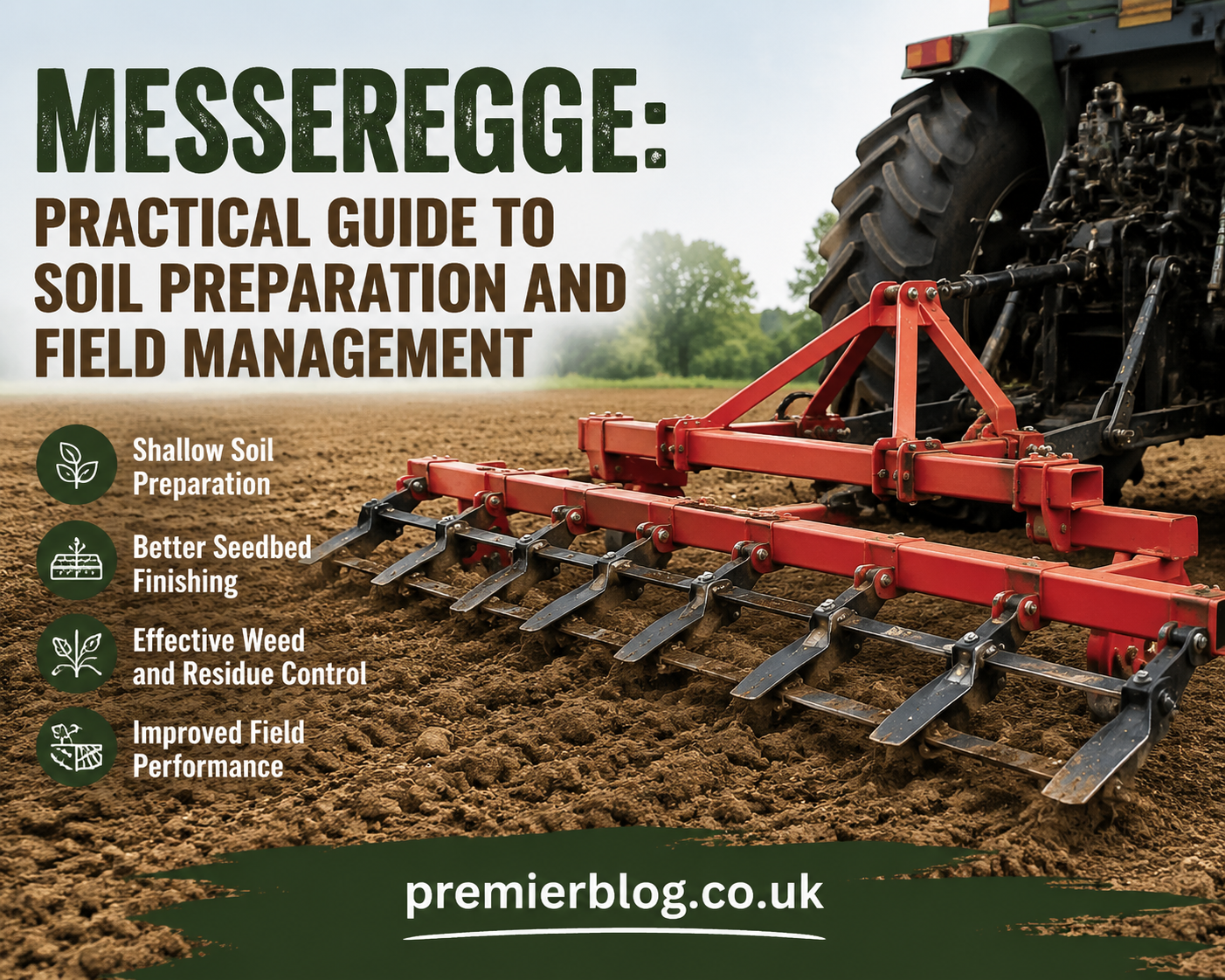
Messeregge is a term connected with soil preparation, field management, and practical farming equipment. In simple words, it refers to a knife-style harrow or blade-based tool used to work the upper layer of soil. The purpose is not to dig deeply or turn the whole field upside down. Instead, it cuts, breaks, loosens, and levels the surface so the ground becomes more suitable for planting.
The word comes from German language roots. “Messer” means knife, while “Egge” means harrow. When combined, the term points toward a harrow that works with knife-like blades rather than only teeth or heavy discs. This gives the tool a specific role in farming: it can slice through crusted soil, light weeds, and surface residue while leaving deeper soil layers less disturbed.
What Messeregge Means in Farming
A messeregge is best understood as a surface-working implement. Farmers use it when the land needs light preparation before sowing, after harvest, or between stages of crop management. Its work is usually shallow, controlled, and focused on the topsoil. This makes it different from heavy ploughing, which turns the soil more deeply.
The tool is useful where farmers want a cleaner and more even field surface without creating too much soil movement. It can help break small clods, reduce surface roughness, mix light residue, and prepare a seedbed. In many cases, this kind of equipment is selected when the field does not need deep tillage but still needs proper finishing.
How a Messeregge Works
The working parts of a messeregge are usually blades, knives, or sharp-edged metal elements fixed to a frame. As the tool moves across the field, these blades cut into the upper soil layer. The action is more slicing than crushing. This helps loosen the surface while keeping the soil structure more stable than aggressive tillage methods.
The depth can often be adjusted depending on the crop, soil type, moisture level, and field condition. A shallow setting may be used to break crust or manage early weeds. A slightly deeper setting may be used to prepare the top layer for seeding. The main idea is control. The tool should do enough work to improve the field, but not so much that it damages soil health.
Why Farmers Use Messeregge
Farmers use a messeregge because it can save time and reduce unnecessary soil disturbance. In agriculture, every field operation costs fuel, labour, and machine wear. If the field only needs shallow preparation, a knife harrow can sometimes do the job faster than heavier equipment.
Another reason is soil protection. Too much deep tillage can disturb natural soil layers, expose moisture, and increase erosion risk. A messeregge works mainly near the surface, so it can help maintain more soil stability. This matters especially in areas where farmers are trying to conserve moisture, reduce compaction, or improve long-term field condition.
Role in Seedbed Preparation
A good seedbed is important because seeds need proper contact with soil, enough air, and suitable moisture. If the ground is too rough, too hard, or covered with uneven residue, germination can be affected. A messeregge helps prepare a more consistent surface before planting.
It does this by cutting clods, loosening the upper layer, and making the field easier for seed drills to operate. The result is usually a finer and more level surface. This does not guarantee better yield by itself, but it supports one of the basic requirements of crop production: even planting conditions.
Weed and Residue Management
A messeregge can also help with early weed control. When young weeds are still small, shallow blade action can cut or uproot them before they become stronger. This can reduce pressure on the crop and may lower the need for repeated chemical control in some farming systems.
The tool can also manage light crop residue left after harvest. Instead of burying all residue deeply, it can cut and spread material across the surface. This helps residue break down more evenly. However, it is not meant for very heavy residue loads unless the machine is designed for that condition.
Difference Between Messeregge and Other Harrows
A traditional tooth harrow usually scratches and levels the soil using pointed teeth. A disc harrow cuts and mixes soil using round discs. A messeregge is different because its knife-like parts focus on slicing action. This gives it a more direct cutting effect on crust, residue, and small weeds.
The choice between these tools depends on field needs. A farmer dealing with heavy soil compaction may need deeper tillage equipment. A farmer preparing a field after light rainfall or dealing with surface crust may prefer a knife harrow. No single tool is best for every field. The right choice depends on the purpose, timing, and soil condition.
Benefits of Using Messeregge
One clear benefit is efficiency. A messeregge can cover land quickly when used for shallow work. It may require less power than heavy cultivation equipment, depending on size and design. This can reduce fuel use and make field operations more economical.
Another benefit is improved field finish. The tool can leave the soil more level and easier to plant. It can also support better water movement across the surface by reducing hard crusts and small ridges. For farmers who want practical field preparation without deep soil disruption, this equipment can be useful.
Limitations and Practical Concerns
A messeregge is not suitable for every job. It cannot replace deep tillage where the soil is badly compacted below the surface. It may also struggle in fields with large stones, very wet soil, or thick crop residue. If used in poor conditions, it may drag material, clog, or create an uneven finish.
Timing also matters. If the soil is too wet, the blades may smear the surface instead of loosening it. If the soil is too dry and hard, the tool may not cut effectively. Farmers need to judge field moisture carefully before using it. Good results depend not only on the machine but also on when and how it is operated.
Maintenance and Safety
Like any blade-based farm tool, a messeregge needs regular inspection. Worn blades reduce cutting quality and increase drag. Loose bolts, bent parts, or uneven blade wear can affect field performance. Farmers should check the frame, blade condition, depth settings, and hitch points before operation.
Safety is also important. The blades can be sharp and heavy. Operators should avoid working near the implement when it is raised or connected to a tractor that is still running. Maintenance should be done on stable ground, with proper support, and with the machine fully secured.
Messeregge in Modern Farming Practice
Modern farming is moving toward more careful soil management. Many farmers are trying to reduce unnecessary passes across the field, protect organic matter, and control input costs. A messeregge fits into this approach when shallow, precise, and limited soil work is needed.
It can be part of a wider system that includes crop rotation, residue management, cover crops, and controlled traffic farming. The tool alone does not solve every soil problem, but it can support better management when used correctly. Its value depends on matching it with the right field conditions and farming goals.
Buying or Selecting a Messeregge
Before choosing a messeregge, a farmer should consider field size, tractor power, soil type, residue level, and the main purpose of use. A smaller farm may need a simpler model, while a larger operation may need a wider and stronger machine. Blade quality, adjustment options, and spare part availability are also important.
It is also useful to compare the tool with existing equipment on the farm. If a farmer already owns a harrow, cultivator, or disc implement, the question should be whether the messeregge adds a clear benefit. A good purchase is not based on the name of the tool only. It is based on whether the tool solves a real field problem.
Conclusion
Messeregge is a practical farming term for a knife-style harrow used in shallow soil preparation. Its main job is to cut, loosen, level, and manage the surface layer of the field. It is useful for seedbed preparation, light weed control, surface crust breaking, and residue handling.
The tool is not a replacement for every tillage machine, and it should not be used as a universal solution. Its strength is controlled surface work. When used at the right time, in the right soil condition, and with proper settings, a messeregge can help farmers prepare land efficiently while reducing unnecessary soil disturbance.